Now it’s time to analyze how Katakana is used in Japanese Language! We have learned in the first week of the semester that there are three writing systems in Japanese: hiragana, katakana and kanji. In this analysis, I will focus on katakana. Referring from Nakama I (by Hatasa and Makino), Katakana’s main function seems to be for loan words, many of which are borrowed from English. The word テストis an example.
However, the definition in other textbooks is more extensive, “[Katakana] is used for transcription of foreign language, loan words from English, representation of onomatopoeia as well as technical and scientific terms and the names for plants and minerals.” Examples of onomatopoeia include コキッ(the sound of the baseball bat hitting the ball in Japanese Manga, Tachi) and キユウウウウウウ、バチチチチチ (the sound of electrical sparks in Japanese Manga, Naruto). These differences in textbooks demonstrate not only the variety in katakana use but also how Japanese scholars interpret katakana with their own unique perspectives.

(Source: Battle Scene Between Sasuke and Naruto in http://jonghsiang.blogspot.com/2009/11/reflection-on-motion-graphic-seminar.html)
In my final katakana analysis, I will give three examples to show multiple uses of katakana.
First, thanks to Susan’s comment, I decided to compare Naruto and Sasuke. Any reader of Japanese manga would have heard of Naruto. However, what struck me as particularly interesting was the contrast between the writing for Naruto (ナルト) vs. Sasuke (佐助). They are main characters in this manga. Then, why are these names written differently? I argue that writing Naruto’s name in Katakana shows his edgy, outgoing and open-minded personality. In contrast, writing Sasuke’s name in Kanji conveys Sasuke’s conservative, traditional and even elitist personality. In this picture, Sasuke's eye is in the lower-right corner. Then, apart from onomatopoeia and loan words, Katakana can also be used to give a modern, high-tech and fashionable meaning to the word.
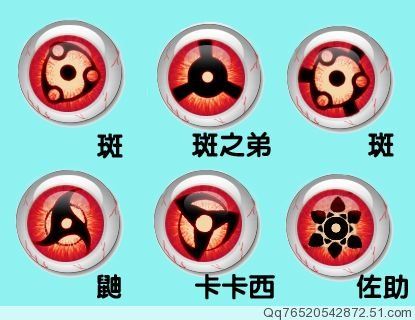
(Source: http://narutocn.52pk.com/shtml/20100519/891961.shtml)
Second, I chose スパイシーモスーバーガ, meaning Spicy Hamburger in Mos Hamburger chain stores. This is interesting because in Japanese, the word spicy (からい) already exists in Japanese. Here, it seems reasonable to argue that using Katakana is various ads can not only create emphasizing effects but also make the ads look more fashionable.

(Source: Mos Hamburger Japanese Website, http://www.mos.co.jp/index.php)
Third, I will use the example of 国産(ごくさん)タバコ, meaning Domestic Cigarettes (Source: Mild Seven Vending Machine). This example is very interesting. Domestic part is written in Kanji; Tobacco part is written in katakana! Here, my argument is that by using hiragana, businessmen appealed to domestic (or national) sentiment; on the other hand, by using katakana, businessmen tried to appeal the exotic nature of Mild Seven cigarettes. How ingenious! Even within the same word, emphasis can be given to a certain part by using katakana.

(Source: Mild Seven Vending Machine, http://moya-pase.cocolog-nifty.com/blog/cat41932914/index.html)
In conclusion, in addition to the textbook definitions that included onomatopoeia, foreign loads and loan words, I have illustrated that Katakana serves various purposes in Japanese. These functions range from 1) Giving the word a much more fashionable appeal 2) Emphasizing certain parts of a word or a phrase 3) a sales tool for conveying the exotic nature of the products.
I hope this analysis will enrich the fascinating discussion of Japanese Katakana.

